Symptoms and causes of menopause
No two women will experience the menopause transition in the exact same way, and this no more true than when it comes to their symptoms. Some women sail through without so much as a single hot flash, while other women struggle with hormonal symptoms from the vey beginning of perimenopause.
For most women, menopause is an age-related event, but for other women, it can be the result of a hysterectomy or other intervention. The cause of your menopause can also influence your symptoms.
What are the signs and symptoms of menopause?
It can be difficult to predict exactly what you might expect from menopause, but understanding which changes in your body may be related to this time of change is an important first step in figuring out what your body needs for support.
.
If you experience one or more of the following symptoms, consider these your signposts that you have entered the menopause transition and your hormones are sending you an SOS that they could use some extra help staying in balance.
Irregular periods
Changes in your period are often the first signal that your sex hormones are beginning to shift in perimenopause. The most important question to answer about your period is, “is it irregular for you?” in terms of the length of your cycle or heaviness of your period.
Hot flashes and night sweats
Research suggests that decreased estrogen levels cause your body’s thermostat (hypothalamus) to become more sensitive to slight changes in body temperature, resulting in hot flashes and night sweats.
Hot flashes can strike once a day, or up to 20 times or more, causing intense flashes of heat along with increased heart rate, dizziness, headache and even claustrophobia or the feeling of being trapped. They can be debilitating, especially when they occur and night and cause sleeplessness.
Sleep difficulties
You may toss and turn restlessly as you try to sleep, or wake up regularly in the middle of the night.
Insomnia in menopause is often caused by a progesterone deficiency in perimenopause or menopause.
Weight gain
Changes to your weight or the shape of your body are another noticeable symptom. Shifting hormones tell your body to store fat in the abdominal area, creating a “
meno belly,” even if you’ve never had a weight problem or extra belly fat before. Weight gain in perimenopause is difficult to lose even with diet and exercise.
Fatigue/loss of energy
Not getting enough sleep may make you feel tired, but exhaustion or
crashing fatigue can occur even when you get a lot of rest, leaving you feeling physically and emotionally drained.
Forgetfulness or fuzzy thinking
One of the most alarming symptoms for many women is
memory changes or fuzzy thinking — and it’s extremely common. This can also be a sign of an imbalance of estrogen and progesterone.
Thinning hair or hair loss
Many women start to notice clumps of hair in their shower drains during menopause or perimenopause. Imbalances between estrogen and testosterone can cause
thinning hair.
Vaginal dryness
It can be a difficult symptom to discuss, but 50% of women in perimenopause and menopause experience vaginal changes, with
dryness, itching and pain that affect their sex lives, activities and even the clothes they wear. Decreased estrogen can cause thinning of vaginal tissue, disrupting natural vaginal lubrication.
Low libido
While vaginal dryness can contribute to
low libido, a drop in progesterone or a testosterone deficiency by itself can also leave you without a sex drive.
Dry and wrinkled skin and/or adult acne
When hormones shift out of balance, you can see it in the mirror in the form of
dry and wrinkled skin, which can be related to lowered estrogen; or hormonal acne, which can be triggered by an imbalance of estrogen and testosterone.
Joint discomfort /stiffness
Joint pain or stiffness in the back, knees or hips is an unexpected symptom that may be caused by fluctuating estrogen levels. Hard to believe but true!
Food cravings
If you’ve always had
food cravings with PMS, you may notice these urges to overeat are getting worse as you enter perimenopause and menopause. This can be due to your body’s increased needs for valuable micronutrients, or to the “crash cycle” pattern of fatigue/carbohydrates/fatigue with hormonal imbalance that so many of us fall into.
Digestive discomfort
Embarrassing and uncomfortable gas, diarrhea, constipation and other
symptoms of digestive distress can all increase in perimenopause and menopause. And again, it’s due to pesky hormonal imbalance.
Anxiety and/or sadness
Perimenopause can raise your stress level, and can create hormonal imbalances that affect mood and emotional health. Stress hormones directly affect the production and balance of other hormones.
Irritability and/or moodiness
Feeling angry all the time and snapping at your friends and family doesn’t feel good — for you or them. Outbursts and mood swings are some of the first signs many women notice in perimenopause.
PMS-like symptoms
You may think stronger cramps, bloating, breast tenderness, headaches or mood swings are due to worsening PMS, but as symptoms get more frequent or severe, it’s often a sign of perimenopause.
What are the Causes of menopause?
Natural menopause
Menopause is caused by a change in the balance of the body’s sex hormones, which naturally and normally occurs as you get older. It happens when your ovaries stop producing as much of the hormone oestrogen and no longer release an egg each month.
Surgical menopause
Surgical menopause occurs after an oophorectomy, a surgery that removes the ovaries. The ovaries are the main source of estrogen production in the female body. Without time to transition, hormonal imbalances are often severe and may benefit from bioidentical hormonal treatment.
Premature or early menopause
Some women may go into menopause at an earlier age (late 30s or early 40s). In many cases there’s no clear cause. However, other causes of early menopause may be related to certain medical treatments, including breast cancer treatments, chemotherapy or radiotherapy, or it can be brought on by an underlying condition, such as Down’s syndrome or Addison’s disease.
How will I know if I am in menopause?
Menopause itself is a clear milestone, but that year of watching and waiting month after month to understand if “this is it!” can be confounding, especially for women may be experiencing irregular periods as a symptom of hormonal imbalance during perimenopause. They may go a few months without a period, or their period is spotty and light. It might feel like menopause is imminent, but then their menstrual cycle returns and the countdown is off.
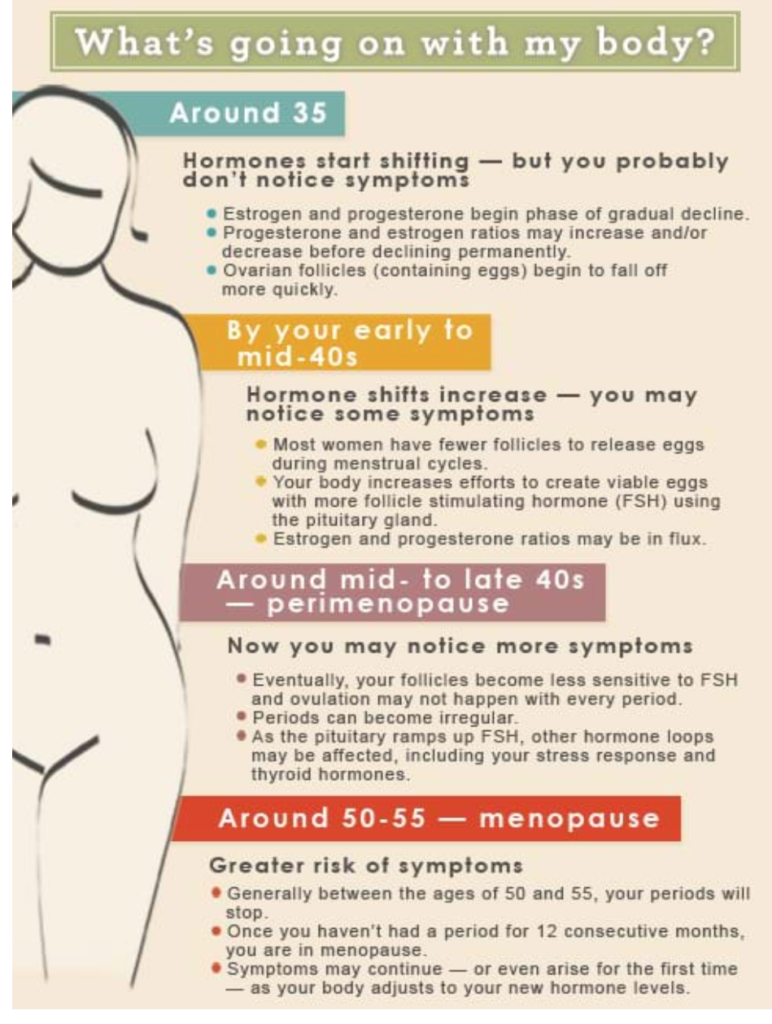
There’s really no single moment to confirm that you’re entering menopause (and whether that first month of a missed period is actually part of menopause or just an irregular cycle). Instead, most women experience a gradual transition through perimenopause and eventually their period stops.
What is the normal menopause age?
The average age for women to enter menopause is 52, though it may occur up to two years earlier for Black and Latina women. More research is needed to understand menopause onset for women of color, but these general guidelines have been found to hold true.
Perimenopause can last anywhere from a few months to several years. Many women begin to notice significant perimenopausal symptoms at some point after their mid-40s. Some women skip perimenopause and enter menopause suddenly without warning. Still other women may experience recognizable symptoms of perimenopause beginning in their mid-30s.
What is premature menopause?
When you’re still in your early 40s and your periods stop — and don’t come back — you may find yourself in early menopause.
Early menopause occurs between the ages of 40 and 45 when a woman experiences menopausal symptoms and then goes a full 12 months without a period. About 5 percent of women undergo menopause between the ages of 40 and 45.
Many women at this age feel too young for menopause and the idea of losing their reproductive ability can be a real jolt. Even though this change may be hard to accept at first, once you understand what’s going on, you can take natural steps to feel good and support your overall health.
About 1 percent of women begin menopause before the age of 40, which is called premature menopause or primary ovarian insufficiency. Women in their 30s who enter menopause naturally may have an underlying hormonal issue and should discuss appropriate testing with their doctors.
Treatments for perimenopause and menopause
Conventional medicine tends to treat menopause as if it’s a disease. The basic argument is that during menopause the ovaries stop producing estrogen and symptoms arise, so replacing that estrogen with a prescription version will therefore quell your symptoms.
While this might be the right choice for some women, “treating” menopause with hormone replacement ignores the innate wisdom of your body and medicalizes a normal physiological process that women have experienced for centuries.
What is hormone therapy?
Synthetic hormone replacement therapy (HRT) was once the gold standard for conventional treatment of women’s menopause symptoms — until we learned the dire consequences of this approach. In 2004, the large-scale Women’s Health Initiative (WHI) revealed that synthetic HRT put women at serious risk of breast cancer, stroke and other life-threatening disorders. The study was a bombshell because, at the time, more than 10 million women were being prescribed some form of synthetic HRT, most commonly during menopause.
The forms of synthetic HRT studied in the WHI included medications such as conjugated equine estrogen (Premarin) and synthetic progestins. Many conventional doctors backed off prescribing these drugs. But guess what? Thanks to the powerful driving force of Big Pharma, synthetic HRT has been creeping back as a standard treatment offered to women — with the same risks!
The Lancet recently studied current offerings of synthetic HRT. This was good science that showed that 15 years later, nothing has changed!
Here is what I tell my patients: these synthetic hormones have no place in your body. Women have so many other ways to effectively rebalance your hormones. It’s always worth exploring these options.
What are non-hormonal therapies for menopause?
I understand how disruptive menopause symptoms can be to your life — hot flashes, night sweats, weight gain, irritability, irregular periods, and worse — feeling exhausted most of the time. The good news is that when a woman needs help for her symptoms, targeted herbal remedies — or phytotherapy — can make a huge difference for menopause symptom relief.
New research is constantly showing us how plant molecules act to balance hormones naturally, just as they have for thousands of years.
One reason phytotherapy is so effective is that certain herbs (known as phytocrines) share important features with natural hormones, thus enabling them to increase the body’s natural ability to make and use hormones and provide symptom relief.